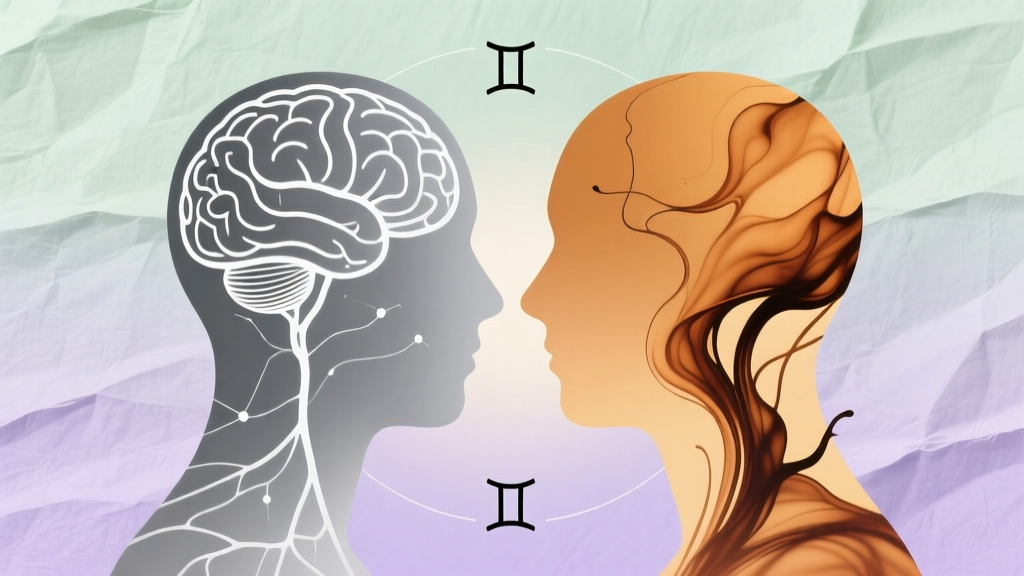
Gemini—the third sign of the zodiac, ruled by Mercury and symbolized by the Twins—occupies a uniquely dynamic space in astrological tradition. Born between May 21 and June 20, Geminis are often the most talked-about—and most misunderstood—sign in the Western zodiac. Their dual nature invites both fascination and mischaracterization: they’re labeled as fickle, shallow, or emotionally detached before their complexity is ever considered. Yet beneath the surface of pop-culture caricatures lies a rich psychological architecture rooted in Mercury’s domain: communication, cognition, adaptability, and intellectual curiosity. This article moves beyond horoscope headlines to examine Gemini (May 21 – June 20) through the lens of enduring astrological scholarship, cognitive psychology, and lived experience—separating myth from measurable reality.
Common Misconceptions About Gemini
Ask someone to describe a Gemini, and you’ll likely hear phrases like “they can’t make up their mind,” “they’re two-faced,” or “they flirt with everyone but mean nothing.” These tropes have seeped so deeply into cultural shorthand that they often overshadow the sign’s foundational traits. The most pervasive misconception is that Gemini’s duality equates to duplicity—that the Twins symbolize moral inconsistency or intentional deception. In truth, the glyph of the Twins reflects relational polarity, not hypocrisy: Gemini seeks understanding through contrast, comparison, and dialogue. As astrologer Steven Forrest explains in The Inner Sky, Gemini’s core drive is to “gather information from multiple perspectives—not to confuse, but to synthesize.”
Another widespread fallacy is that Geminis lack emotional depth. Because they process feelings intellectually—often verbalizing, analyzing, or reframing emotions rather than expressing them somatically—they’re wrongly assumed to be emotionally stunted. Yet research in emotional intelligence literature confirms that cognitive processing of emotion is not its absence—it’s a distinct regulatory strategy. Similarly, the stereotype of Gemini as perpetually restless and commitment-averse ignores how Mercury-ruled signs thrive in environments where growth is tied to learning, not static loyalty. A Gemini may leave a job, relationship, or city not out of disloyalty—but because their developmental path requires novelty as a catalyst for insight.
Even their famed sociability is misrepresented: being naturally curious about others doesn’t equal superficiality. Rather, Gemini’s conversational fluency stems from an innate need to map human complexity—to ask questions not to perform, but to orient themselves ethically and intellectually within shared reality. When reduced to “chatty air sign,” their role as cultural translators, bridge-builders, and early adopters of new ideas is erased.
The Real Truth Behind Gemini Stereotypes
The truth behind Gemini stereotypes lies not in refuting them outright—but in recontextualizing them through astrological mechanics and psychological nuance. Take the “inconsistency” label: astrologically, Gemini is a mutable air sign. Mutable signs (Gemini, Virgo, Sagittarius, Pisces) govern transitions and adaptation; air signs govern thought, connection, and abstraction. So Gemini’s apparent unpredictability is actually high-fidelity responsiveness—a trait evolutionarily advantageous in rapidly shifting social or informational landscapes. Modern neuroscience supports this: studies on cognitive flexibility—such as those published by the National Institutes of Health—show that individuals with strong prefrontal cortex engagement (associated with Mercury-ruled cognition) demonstrate superior task-switching and pattern recognition, especially under ambiguity.
Similarly, the “two-faced” trope dissolves when we understand Gemini’s duality as dialectical thinking—not contradiction, but synthesis. In ancient Greek philosophy, the concept of dialectics (Heraclitus, Plato) held that truth emerges from the tension between opposing ideas. Gemini embodies this principle: they don’t hold two truths simultaneously to deceive, but to refine. A Gemini might argue both sides of a debate—not to win, but to locate the fulcrum of understanding. This mirrors contemporary educational theory: the Association for Supervision and Curriculum Development highlights dialectical reasoning as essential for critical literacy and ethical decision-making—skills central to Gemini’s evolutionary purpose.
Emotionally, Gemini’s “lightness” is often a protective rhythm—not avoidance. Mercury-ruled individuals frequently develop early coping strategies involving humor, wordplay, or intellectual distancing—especially if raised in environments where raw emotion felt unsafe or overwhelming. That doesn’t indicate incapacity; it signals resilience. Many Geminis report deep, long-term bonds built on mental intimacy, shared curiosity, and mutual growth—relationships that deepen over decades precisely because they’re anchored in evolving dialogue, not fixed roles.
What Pop Astrology Gets Wrong About Gemini
Pop astrology—driven by virality, brevity, and algorithmic engagement—reduces Gemini to three reductive memes: the “hot girl who texts back then ghosts,” the “chaotic neutral friend who cancels plans last minute,” and the “genius who knows everything but applies nothing.” While catchy, these narratives flatten Mercury’s nuanced rulership. Mercury isn’t just about texting speed or trivia recall—it governs symbolic mediation: how we translate inner experience into shared meaning via language, logic, metaphor, and technology. Pop astrology rarely acknowledges that Gemini energy fuels journalism, translation, coding, podcasting, teaching, and UX design—fields requiring precision, empathy, and systemic pattern recognition.
Worse, pop astrology conflates Sun sign Gemini with the entire natal chart. A person born May 28 with a Gemini Sun but a Capricorn Moon and Saturn in the 10th house will express Gemini traits with discipline, structure, and long-term vision—radically tempering stereotypical restlessness. Yet horoscope columns rarely mention rising signs, planetary aspects, or house placements—making Gemini seem universally scattered, when in fact, a Gemini with a stellium in Virgo or a tight Mercury-Pluto square may exhibit intense focus, investigative rigor, or strategic communication.
Additionally, pop astrology ignores historical and cross-cultural context. In Vedic astrology, Gemini (Mithuna) is associated with balance, partnership, and artistic expression—not just intellect. Ancient Babylonian omens linked Gemini to messengers and boundary-crossers—figures who navigated liminal spaces between kingdoms, languages, and realms of knowledge. Modern interpretations erase this sacred intermediary function, reducing the sign to interpersonal whimsy instead of its archetypal role as a conduit for collective understanding.
The Deeper Reality of Being a Gemini
To live as a Gemini is to carry Mercury’s caduceus—a staff entwined with two serpents—symbolizing integration of opposites, healing through dialogue, and the alchemy of exchange. The deeper reality is one of profound relational intelligence. Geminis often possess an uncanny ability to mirror others’ speech patterns, values, and emotional frequencies—not to manipulate, but to establish resonance. This makes them exceptional mediators, educators, therapists, and crisis communicators. During societal upheavals—from pandemic misinformation to political polarization—Gemini-ruled voices (like science journalists, fact-checkers, and empathic tech ethicists) become vital infrastructure.
Psychologically, Gemini’s shadow work centers on grounding abstraction. Their challenge isn’t “being serious enough”—it’s learning to let insights settle into embodied wisdom. Many mature Geminis develop tactile practices—writing by hand, learning instruments, gardening, or craftwork—to anchor mental agility in sensory presence. Astrologer Liz Greene notes in Relating: An Astrological Guide to Living with Others that Gemini’s evolutionary task is to move from “knowing about” to “knowing with”—to transform information into relational attunement.
Neurodiversity also intersects meaningfully with Gemini expression. ADHD and autism communities report high resonance with Gemini themes: hyperfocus on niche topics, rapid associative thinking, stimming through verbal repetition or wordplay, and social exhaustion masked by charm. This isn’t pathology—it’s neurocognitive variation aligned with Mercury’s wiring. When supported, these traits fuel innovation: think of Ada Lovelace (pioneer of computing), Maya Angelou (linguistic architect), or Tim Berners-Lee (inventor of the World Wide Web)—all Geminis whose legacies rest on connecting disparate ideas into new systems of meaning.
Gemini Beyond the Horoscope Column
Gemini energy transcends birth dates—it’s a universal principle activated whenever humans seek clarity through exchange. Consider open-source software development: thousands of contributors across time zones debating code syntax, documenting edge cases, refining APIs—this is Gemini in action. Or community storytelling projects that collect oral histories from elders and youth alike, weaving generational perspectives into shared narrative—again, Gemini’s dialectical gift. Even AI language models, trained on vast corpora to recognize patterns, generate responses, and mediate human queries, operate on Mercury’s symbolic terrain.
In relationships, Gemini’s highest expression isn’t “keeping things fun”—it’s cultivating intellectual safety: spaces where partners can revise beliefs, voice contradictions, and explore ideas without fear of judgment. Long-term Gemini partnerships often evolve through successive “phases of discovery”—learning new facets of each other’s minds across decades, never assuming mastery. This stands in stark contrast to fixed-sign relationships oriented toward stability of form; Gemini relationships prioritize stability of process.
Culturally, Gemini rises during information revolutions. The printing press, radio, television, and now generative AI—all expanded humanity’s capacity to transmit, remix, and interrogate ideas. Each leap demanded Gemini-like skills: literacy, editing, contextual framing, ethical curation. As misinformation proliferates, the world doesn’t need fewer Geminis—it needs more ethically grounded ones: those who wield Mercury’s power not for speed alone, but for discernment, integrity, and service to collective understanding.
Myth vs. Fact: Gemini Quick Comparison Table
| Myth | Fact | Astrological / Psychological Basis |
|---|---|---|
| Gemini is two-faced and untrustworthy. | Gemini embodies dialectical thinking—holding multiple perspectives to arrive at integrated truth. | Mercury rules synthesis; the Twin glyph represents relational polarity, not moral division (Astro.com on Mercury). |
| Gemini people are emotionally shallow. | Gemini processes emotion cognitively—as inquiry, narrative, or metaphor—not as somatic overwhelm. | Research shows verbal-emotional regulation is a valid, adaptive strategy (NIH on cognitive flexibility). |
| Gemini can’t commit or follow through. | Gemini commits to process—learning, adapting, communicating—not static outcomes. | Mutable signs excel in iterative growth; Mercury-ruled goals evolve with new data (Steven Forrest on Mercury). |
| Gemini is just “the chatty one.” | Gemini is the zodiac’s primary translator—bridging disciplines, generations, cultures, and technologies. | Vedic tradition names Mithuna (Gemini) as the sign of skilled communication and artistic harmony. |
In closing, Gemini is not a personality type to be decoded or managed—but a living principle of connection, curiosity, and cognitive grace. To mistake their agility for aimlessness, their wit for emptiness, or their adaptability for unreliability is to miss the quiet heroism of their mission: to keep human understanding fluid, honest, and perpetually expanding. Whether you’re a Gemini seeking self-recognition—or someone trying to understand one—the invitation is the same: listen not just to their words, but to the architecture of thought behind them. For in every Gemini conversation, there’s not just noise—there’s the hum of meaning being made, together.