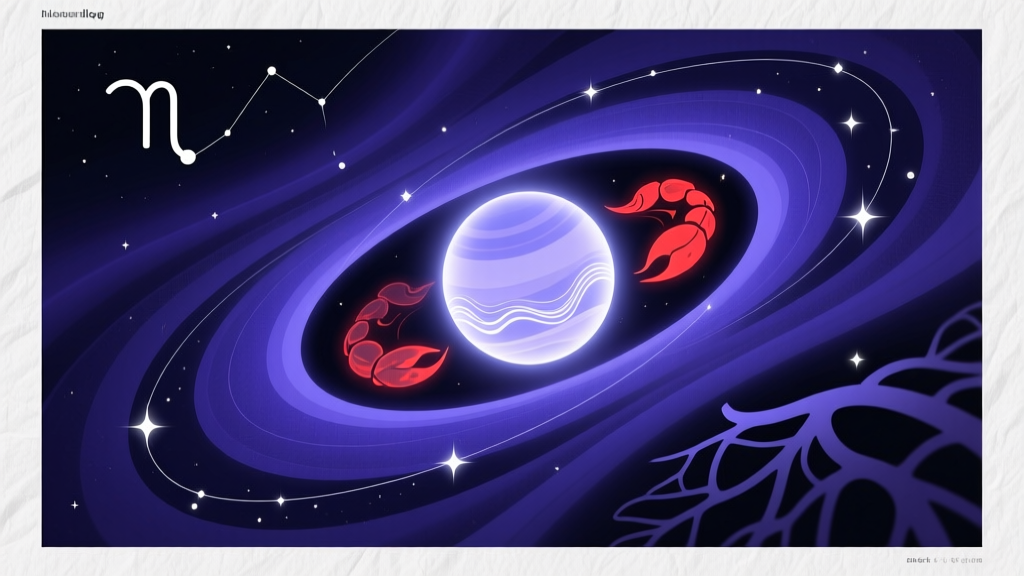
Scorpio (October 23 – November 21) stands apart in the zodiac not only for its emotional depth and magnetic presence but for its uniquely layered planetary rulership—a duality that reflects the sign’s profound complexity. Unlike most signs governed by a single planet, Scorpio is co-ruled by Pluto, the modern ruler, and Mars, its traditional ruler. This dual sovereignty isn’t a contradiction—it’s a cosmic dialogue between raw instinct and evolutionary power, between action and metamorphosis. Understanding this planetary partnership is essential to grasping what makes Scorpio one of astrology’s most psychologically potent signs. In this article, we explore how Pluto and Mars jointly shape Scorpio’s psyche, behavior, and life path—and how transiting planets activate or challenge these core energies across time.
The Ruling Planet of Scorpio
Scorpio’s rulership is among the most nuanced in astrology. Traditionally, Mars ruled Scorpio—just as it rules Aries—bestowing courage, desire, aggression, and primal drive. But with the discovery of Pluto in 1930, astrologers recognized a deeper resonance: Pluto’s domain over death, rebirth, hidden power, and psychological transformation aligned uncannily with Scorpio’s archetypal essence. Today, the consensus among modern astrologers—including those at the Astro.com Rulership Guide—is that Pluto is Scorpio’s primary, modern ruler, while Mars retains significant traditional authority. This dual rulership reflects Scorpio’s paradoxical nature: simultaneously fierce and patient, outwardly controlled yet inwardly volcanic.
Pluto governs the 8th house—the house of shared resources, intimacy, inheritance, psychological depths, and regeneration. Its slow orbit (taking ~248 years to circle the Sun) means it spends roughly 12–30 years in each sign, imprinting generational themes. For individual Scorpios, however, Pluto’s placement in their natal chart reveals where they experience compulsions, crises, and ultimate empowerment. Mars, by contrast, moves swiftly—spending about 6–7 weeks in each sign—and activates Scorpio’s immediate will, sexual energy, and capacity for decisive action. As astrologer Steven Forrest writes in The Inner Sky, “Mars gives Scorpio its sting; Pluto gives it its venom—and its antidote.” This distinction is critical: Mars initiates; Pluto transforms the initiation into something irreversible.
Importantly, Pluto’s rulership doesn’t negate Mars—it sublimates it. Where Mars seeks conquest, Pluto seeks sovereignty through surrender. Where Mars fights to win, Pluto dissolves the battlefield itself to reconstruct reality from the ground up. This dynamic explains why Scorpios often appear calm before detonating with focused intensity: their energy isn’t scattered—it’s pressurized, waiting for the precise moment of catalytic release. The International Society for Astrological Research (ISAR) affirms this layered rulership model in its certification standards, emphasizing that traditional and modern rulerships offer complementary lenses—not competing truths.
How the Ruling Planet Shapes Scorpio Personality
Pluto’s influence on Scorpio manifests most visibly in three interlocking dimensions: psychological depth, regenerative resilience, and magnetic discernment. Scorpios are rarely satisfied with surface narratives. They possess an almost forensic intuition—able to sense unspoken tensions, hidden motives, or suppressed emotions in others long before those elements surface consciously. This isn’t mere suspicion; it’s a perceptual attunement rooted in Pluto’s association with the unconscious. As Jungian astrologer Liz Greene notes in Relating: An Astrological Guide to Living with Others, “Scorpio doesn’t read people—it resonates with them, like tuning forks vibrating at the same frequency of buried truth.”
Mars adds the vital spark of agency. Without Mars, Pluto’s transformative power could remain passive or fatalistic. Mars ensures Scorpio acts—not just observes. It fuels their legendary determination, their ability to pursue goals with near-obsessive focus, and their willingness to endure hardship for long-term payoff. This combination creates a personality type that thrives in high-stakes environments: crisis management, investigative work, psychology, surgery, intelligence, or finance—fields demanding both incisive perception and unwavering resolve.
Scorpio’s emotional architecture is also shaped by this planetary duo. Mars contributes passion, jealousy, and protective fury—especially when loved ones are threatened. Pluto deepens those reactions into lifelong loyalties or irreversible severances. A Scorpio’s trust, once earned, is absolute—but betrayal triggers not just anger, but a full-scale psychological recalibration. Their forgiveness isn’t about forgetting; it’s about integrating the wound into a new identity. This is Pluto’s signature: destruction as prerequisite for rebirth. Research published in the Journal of Analytical Psychology links Pluto-ruled placements with heightened neural sensitivity to threat and reward anticipation—supporting Scorpio’s reputation for strategic patience and delayed gratification.
Even Scorpio’s famed secrecy serves a planetary purpose. Mars values privacy as tactical advantage; Pluto guards the inner sanctum as sacred ground—where ego death and rebirth occur. To expose oneself prematurely risks diluting the alchemical process. Thus, Scorpios often reveal themselves incrementally, testing authenticity before granting access. Their silence isn’t emptiness—it’s density.
Planetary Transits and Their Impact on Scorpio
Because Scorpio is ruled by two planets, its responsiveness to transits is uniquely layered. When Pluto transits a Scorpio’s natal chart—especially over personal planets (Sun, Moon, Ascendant, Venus, or Mars)—it initiates multi-year cycles of profound restructuring. A Pluto transit to the Sun, for example, may coincide with career reinvention, loss of old identity markers, or emergence of authentic authority. These transits rarely bring comfort—but they reliably catalyze growth that lasts decades. Pluto’s current transit through Aquarius (2024–2044) activates Scorpio’s 3rd house of communication, siblings, and local environment—pushing native Scorpios to transform how they gather, share, and wield information. Expect increased interest in investigative journalism, data ethics, or community-level reform.
Mars transits produce sharper, shorter-term effects. When Mars crosses Scorpio’s natal Sun or Ascendant, energy surges—motivation peaks, physical stamina increases, and assertiveness sharpens. But Mars in challenging aspect (e.g., square or opposition to natal Saturn or Neptune) can trigger impulsive decisions, burnout, or conflicts rooted in misdirected intensity. Scorpios benefit immensely from tracking Mars’ 2-year cycle: its retrograde phases (occurring every 26 months) invite review of desires, boundaries, and self-advocacy strategies.
Other key transits include Jupiter in Scorpio (last occurred 2017–2018), which expanded Scorpio’s capacity for trust, intimacy, and shared resources—often through inheritances, joint ventures, or therapeutic breakthroughs. Saturn in Scorpio (2012–2015) imposed necessary limits on control, forcing Scorpios to confront dependencies, power imbalances, and the cost of emotional withholding. As astrologer Demetra George explains in Annual Planetary Guide, “Saturn in Scorpio teaches that true power lies not in dominance, but in the disciplined use of vulnerability.”
Transits to Scorpio’s 8th house cusp (ruled by Pluto) are especially potent. Uranus crossing here sparks sudden financial shifts or revelations about shared assets; Neptune here may blur boundaries around intimacy or debt—requiring clarity and boundaries. Each transit interacts with Scorpio’s natal chart configuration, making personalized interpretation essential—but the rulership lens provides the foundational grammar.
Scorpio During Mercury Retrograde
Mercury retrograde affects all signs—but for Scorpio, it carries distinctive psychological weight. Because Mercury rules communication, logic, and short-distance travel, its apparent backward motion disrupts surface-level exchange. Yet Scorpio’s rulership by Pluto means it instinctively navigates Mercury retrograde not as chaos, but as an invitation to deep revision. While other signs fret over miscommunications, Scorpios often use this period to revisit unresolved emotional contracts, re-examine motivations behind past decisions, or unearth subconscious patterns influencing current relationships.
During Mercury retrograde in air signs (Gemini, Libra, Aquarius), Scorpio’s 3rd, 7th, and 11th houses are activated—prompting reflection on how they communicate needs, negotiate partnerships, and align with groups or causes. In water signs (Cancer, Scorpio, Pisces), the retrograde hits home: Scorpios may confront buried grief, reassess family dynamics, or gain startling insights into their own emotional triggers. Notably, Mercury retrograde in Scorpio itself (occurring roughly every 3–4 years) is a rare and powerful event—intensifying introspection, dream recall, and intuitive downloads. This is when Scorpios report vivid prophetic dreams or sudden realizations about karmic loops.
Crucially, Scorpio’s Mars-Pluto synergy helps them avoid Mercury retrograde pitfalls. Mars provides the discipline to double-check contracts; Pluto grants the insight to spot hidden clauses or unspoken agendas. Rather than canceling plans, Scorpios often leverage Mercury retrograde: renegotiating agreements, auditing finances, conducting background research, or initiating therapeutic dialogues. Astrologer Kelly Surtees, co-founder of the North Point Astrology School, observes that “Scorpio is the only sign that treats Mercury retrograde like a sacred pause—not a cosmic glitch.” Their ability to find meaning in disruption is a direct expression of Pluto’s regenerative mandate.
Other Planetary Influences on Scorpio
While Pluto and Mars define Scorpio’s core, other planets modulate its expression in vital ways. Venus in Scorpio intensifies attraction, merging love with loyalty, possession, and soul-level recognition. Relationships become laboratories for transformation—where intimacy demands radical honesty and mutual surrender. Moon in Scorpio amplifies emotional depth, creating individuals who feel with seismic intensity and process feelings privately, often through creative or ritual channels.
Saturn’s influence on Scorpio cannot be overstated. Though not a ruler, Saturn’s affinity with Scorpio’s 8th house themes—endurance, legacy, and structural power—makes it a crucial ally. Saturn teaches Scorpio to channel its immense energy into sustainable systems: building financial security, mastering psychological disciplines, or cultivating enduring influence. Conversely, poorly aspected Saturn can manifest as chronic suspicion, emotional inhibition, or fear of vulnerability masquerading as control.
Neptune softens Scorpio’s edges, adding compassion, artistic vision, or spiritual idealism—but also risks of self-deception or boundary erosion if ungrounded. Uranus, ruling Scorpio’s 11th house of networks and future visions, inspires revolutionary thinking and humanitarian commitments—yet can destabilize Scorpio’s preference for deep, exclusive bonds. Finally, Jupiter expands Scorpio’s capacity for faith—not blind optimism, but faith in the process of renewal. Jupiter in Scorpio years (e.g., 2017–2018) often correlate with societal reckonings around power, secrecy, and justice—mirroring Scorpio’s collective role as truth-seeker and systemic healer.
Planetary Influence Quick Reference Table
| Planet | Role for Scorpio | Key Themes | Natal Expression Example |
|---|---|---|---|
| Pluto (Modern Ruler) | Primary ruler; governs 8th house | Transformation, power, rebirth, psychological depth, taboo subjects | Intense focus on healing trauma; draws others’ hidden truths to light |
| Mars (Traditional Ruler) | Co-ruler; governs drive and assertion | Desire, courage, sexuality, confrontation, survival instinct | Unwavering commitment to goals; protective of loved ones; strategic risk-taker |
| Venus | Significator of love & values | Passionate loyalty, magnetic attraction, shared resources, emotional fusion | Seeks soulmate-level intimacy; uncomfortable with superficial romance |
| Saturn | Generational disciplinarian | Endurance, responsibility, legacy building, structural power | Builds wealth methodically; mentors others in psychological mastery |
| Neptune | Illusion & transcendence | Compassion, mysticism, artistic depth, boundary dissolution | Uses music/art to process grief; drawn to esoteric healing modalities |
In conclusion, Scorpio’s cosmic signature is neither singular nor simple—it is a dialectic of fire and depth, action and annihilation, Mars and Pluto. To understand a Scorpio is to recognize that their stillness contains velocity, their silence holds volumes, and their loyalty is forged in trials that would shatter lesser wills. Their rulership model reminds us that evolution requires both the spark and the crucible—and that true power emerges not from control, but from the courage to let go, descend, and rise again, transformed. As the ancient Hermetic axiom states: “That which is below is from that which is above, and that which is above is from that which is below.” For Scorpio, the descent is the ascent.