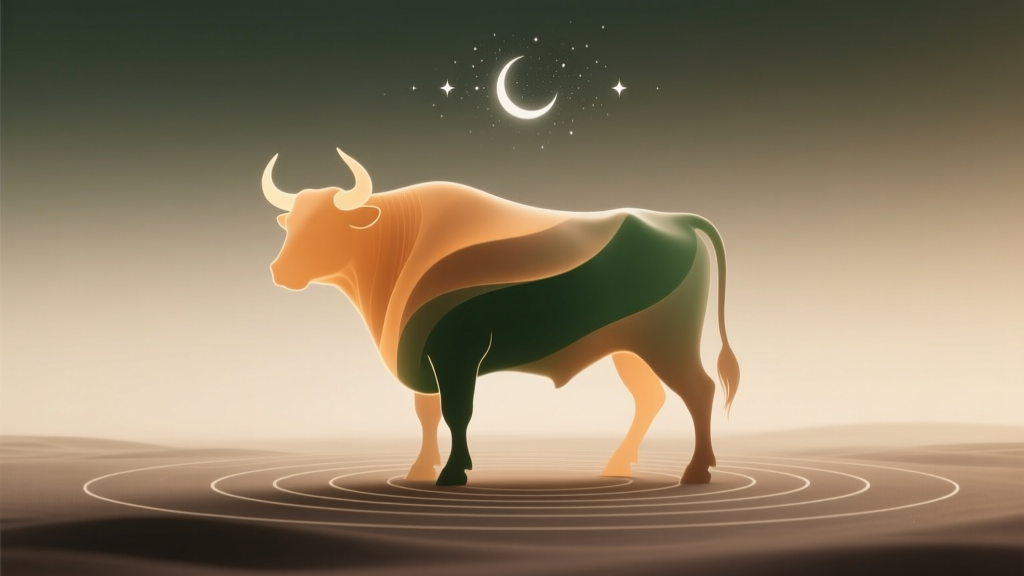
Taurus (April 20 – May 20) is ruled by Venus—the planet of love, beauty, values, and embodied pleasure—and grounded in the stable, sensual energy of Earth. Unlike fire or air signs that seek rapid transformation or intellectual abstraction, Taurus evolves through deep presence, tactile devotion, and unwavering loyalty to truth as it’s felt in the body and honored in relationship. From a spiritual and karmic lens, Taurus carries one of astrology’s most profound lessons: that sacred stability is not stagnation—but the fertile ground from which true abundance, self-worth, and divine patience blossom. This article explores how Taurus’ spiritual journey unfolds across lifetimes—not through dramatic upheaval, but through the quiet, courageous act of choosing integrity over convenience, depth over distraction, and reverence over possession.
The Soul Lesson of Taurus
The core soul lesson of Taurus is embodied sovereignty: learning to anchor divine worth in the physical self—not as an achievement, but as birthright. Taurus doesn’t need to earn value; it must remember it—through touch, taste, rhythm, silence, and the slow, steady pulse of breath in stillness. In many spiritual traditions, the throat (ruled by Taurus’ planetary co-ruler Mercury in its exaltation sign, Virgo) and the neck are seen as bridges between spirit and matter—making Taurus uniquely positioned to voice truth with grounded clarity. Yet this gift is often obscured by early-life conditioning that equates security with control, love with possession, or self-worth with material accumulation.
According to Astro.com’s Venus dossier, Venus-ruled signs like Taurus carry karmic assignments related to 'how we receive and give love, define value, and relate to resources—both tangible and energetic.' For Taurus, this translates into a lifelong recalibration: moving from scarcity-based hoarding (of time, affection, money, or attention) toward generous receptivity—trusting that the universe sustains what is tended with sincerity. The soul lesson isn’t about acquiring more, but about releasing the illusion that safety lies outside oneself. When Taurus integrates this, it becomes a living altar—calm, radiant, unshakable—not because nothing threatens it, but because it has learned to hold space for all experience without losing center.
This lesson is rarely taught through epiphanies, but through repetition: seasons turning, crops growing, relationships deepening over years, bodies aging with grace. As astrologer Steven Forrest writes in The Inner Sky, 'Taurus teaches us that evolution happens in the soil, not the sky.' Its spiritual maturity emerges when the Bull stops defending territory and begins tending sanctuary—within itself and for others.
Karmic Patterns for Taurus
Taurus embodies some of the most persistent karmic patterns in the zodiac—patterns rooted in attachment, resistance to change, and misaligned value systems. These aren’t flaws; they’re echoes of past-life contracts designed to refine discernment, deepen commitment, and restore sacred reciprocity. A recurring karmic theme for Taurus is the misuse of endurance: staying in situations long after their purpose has expired—relationships, careers, belief systems—out of loyalty, fear of loss, or habit masquerading as principle. This pattern often stems from lifetimes where survival depended on immovability—perhaps as a steward of land, keeper of lineage, or guardian of sacred objects—leading the soul to conflate duty with destiny.
Another key karmic imprint involves value distortion: equating self-worth with external validation—be it financial success, physical appearance, social status, or even spiritual attainment. This misalignment can manifest as chronic undervaluing (self-sabotage, undercharging, silent resentment) or overvaluation (entitlement, rigidity, possessiveness). The karmic correction lies not in rejecting materiality—but in purifying intention: asking, Is this mine to hold—or to honor?
To clarify these patterns, consider the following structured comparison:
| Karmic Pattern | Root Imbalance | Soul-Level Correction | Embodied Practice |
|---|---|---|---|
| Resistance to necessary change | Fear that letting go = annihilation | Trusting cycles as sacred rhythm—not threat | Seasonal ritual: releasing one non-essential item each solstice/equinox |
| Possessiveness in relationships | Confusing love with ownership | Cultivating unconditional regard + healthy boundaries | Daily affirmation: "I love you freely—and I am free." |
| Self-worth tied to productivity | Equating rest with failure | Reclaiming stillness as sacred labor | 90-second breath pause before checking email or phone |
As noted by the Council of Astrology Professionals, ethical karmic interpretation avoids fatalism—it emphasizes agency. Taurus’ karma isn’t punishment; it’s curriculum. Each time a Taurus chooses presence over performance, generosity over guarding, or release over rigidity, they dissolve ancestral contracts and seed new blessings for generations.
Spiritual Growth Path for Taurus
Taurus’ spiritual growth path is deceptively simple—and profoundly challenging: to become a vessel for stillness that transforms. This requires moving beyond comfort-seeking into conscious cultivation of inner sanctuary. Unlike signs energized by novelty, Taurus thrives on continuity—but spiritual continuity means evolving the quality of presence, not merely repeating routines. Its growth arc moves from security → self-trust → sacred stewardship.
In early development, Taurus seeks safety externally—through stable environments, reliable people, predictable rhythms. As awareness matures, it begins sensing that true security arises from internal coherence: the alignment between action, values, and bodily intuition. This phase often triggers crisis—when external structures fail or no longer serve, forcing Taurus to ask: What do I truly value—beneath habit, expectation, or inherited belief? The final stage is stewardship: using its innate capacity for consistency, patience, and sensory attunement to nurture others’ growth—not as savior, but as grounded witness and resource.
Crucially, Taurus’ growth is measured not in milestones, but in micro-shifts of resonance: the moment it speaks a boundary without apology; the choice to sit with grief instead of numbing it with food or distraction; the willingness to let a project end—even if unfinished—because its soul-contract has expired. As North Point Astrology observes, 'Taurus’ highest expression isn’t immovable—it’s unshakeably kind.' Kindness here is not passive; it’s fierce, discerning, and rooted in unflinching self-honesty.
This path demands reverence for slowness. In a world glorifying speed, Taurus’ spiritual rebellion is to linger—to taste tea fully, to listen until silence speaks, to wait for the right word instead of settling for the easy one. Its enlightenment arrives not in lightning strikes, but in the gradual, golden light of dawn—steady, inevitable, life-giving.
Taurus and Past Life Themes
Because Taurus governs the neck, throat, and vocal cords—and rules the second house of possessions, values, and resources—past life research and regression work frequently reveal incarnations centered around stewardship, craftsmanship, and embodied service. Common Taurus past life archetypes include: temple keepers who safeguarded sacred objects and rituals; agrarian elders who held seasonal knowledge and mediated between community and land; artisans whose hands shaped beauty from raw materials; and healers who used touch, herbs, and song to restore balance.
These roles share a thread: responsibility anchored in reverence. Yet karmic tension arises when such roles became entangled with power, control, or exclusivity—e.g., hoarding sacred texts, restricting access to healing, or enforcing rigid hierarchies around land use or craft mastery. Modern Taurus may feel inexplicable guilt around abundance, discomfort receiving help, or intense aversion to being ‘on display’—echoes of lifetimes where visibility invited exploitation or where generosity was punished.
Notably, Taurus’ association with the goddesses Hathor (Egyptian deity of joy, music, and fertility) and Aphrodite (Greek embodiment of embodied love and aesthetic truth) suggests soul contracts involving the sacred feminine—particularly the restoration of feminine authority rooted in sensuality, creativity, and relational ethics. Many Taureans report vivid dreams of ancient temples, orchards, or rivers—symbols pointing to ancestral lineages connected to earth-based spirituality and cyclical cosmology.
Understanding these themes isn’t about literal past lives—it’s about recognizing archetypal imprints that shape present-day instincts. When a Taurus feels paralyzing resistance to change, it may be echoing a lifetime where sudden upheaval meant famine or exile. When it experiences deep shame around desire, it may carry cellular memory of lifetimes where sensuality was criminalized or commodified. Spiritual healing occurs not by erasing these echoes—but by meeting them with compassion, then consciously rewriting the narrative: I am safe to want. I am worthy of ease. My body is holy ground.
Meditation and Spiritual Practices for Taurus
Taurus responds best to practices that engage the senses, honor rhythm, and cultivate somatic awareness. Abstract visualization or fast-paced mantra work often feels alienating—while grounding, tactile, and nature-integrated methods resonate deeply. Effective spiritual practices for Taurus include:
- Earthing meditation: Sitting barefoot on soil, grass, or sand while breathing slowly—focusing on the weight of the body, the texture beneath the skin, and the subtle hum of the earth. This directly activates Taurus’ connection to Gaia and restores nervous system regulation.
- Vocal toning with low-frequency sounds: Humming, chanting ‘Om’ or ‘Lam’ (root chakra bija), or singing simple melodies—engaging the throat (Taurus’ physical domain) to release stored tension and align vibration with stability.
- Slow-motion movement rituals: Tai chi, qigong, or mindful walking—emphasizing weight transfer, breath coordination, and proprioceptive awareness rather than exertion or speed.
- Sensory altars: Creating small, beautiful arrangements using natural elements—crystals (especially rose quartz, green aventurine, or moss agate), fresh flowers, beeswax candles, essential oils (ylang-ylang, sandalwood, vetiver)—to anchor presence and invite devotion.
A powerful Taurus-specific practice is the Five Senses Inventory: daily, pause three times to name—one thing you see, hear, smell, taste, and touch—with full attention. This simple act rewires neural pathways away from anxiety-driven scanning and toward embodied gratitude. Over time, it reconditions the nervous system to associate safety with presence—not perfection.
For deeper integration, Taurus benefits from lunar-aligned rituals—especially during the Full Moon in Taurus (November), when Venus-ruled energies peak. Lighting a candle, writing down one attachment to release, and burying the paper in soil honors both Taurus’ elemental nature and its karmic work of surrender.
Spiritual Growth Checklist for Taurus
Use this actionable, soul-centered checklist to track authentic growth—not productivity. Mark items only when they reflect sustained inner shift, not occasional effort.
- ✅ I pause before reacting—feeling my feet on the floor and breath in my belly.
- ✅ I name my values aloud—and align at least one daily decision with them.
- ✅ I receive a compliment or gift without deflecting, minimizing, or over-explaining.
- ✅ I release something (an object, habit, or expectation) that no longer serves my peace—even if it’s ‘practical.’
- ✅ I speak a necessary truth—even when it risks comfort—with kindness and clarity.
- ✅ I spend 10+ minutes daily in silent presence—no goal, no agenda, just being.
- ✅ I forgive myself for a past ‘failure’—not by excusing it, but by honoring the wisdom it seeded.
This checklist reflects Taurus’ evolutionary signature: progress measured in depth, not distance. There is no ‘finish line’—only ever-deepening layers of trust in the body, the heart, and the quiet, unshakable voice within. As the Bull learns to stand not in defiance—but in devotion—to its own sacred rhythm, it becomes a living testament to the spiritual truth that the most revolutionary act is to be here, wholly, without apology.